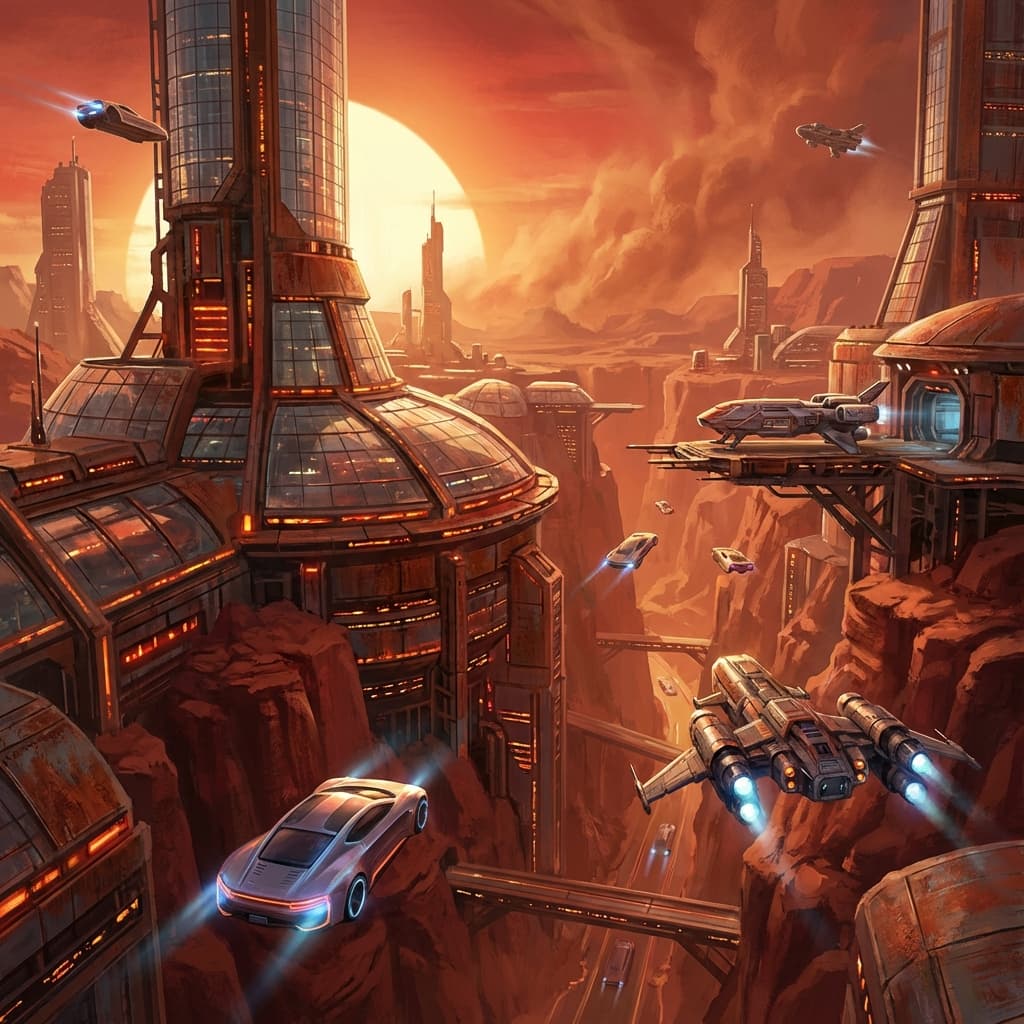
Elon Musk, the visionary entrepreneur behind Tesla, SpaceX, Neuralink, and X (formerly Twitter), has unveiled an ambitious slate of technological initiatives for 2026 that promise to push the boundaries of what's possible. From brain-computer interfaces to sustainable energy solutions and space exploration, Musk's plans could fundamentally reshape multiple industries this year.
As we enter 2026, Musk's companies are at critical junctures. Tesla is launching next-generation vehicles, SpaceX is preparing for Mars missions, Neuralink is expanding human trials, and xAI is challenging the AI establishment. Let's dive deep into what Musk has planned for this transformative year.
Tesla's 2026 Game Plan: Affordable EVs and Autonomous Revolution
The $25,000 Tesla: Making EVs Accessible
Perhaps the most anticipated announcement is Tesla's plan to finally deliver on its promise of a $25,000 electric vehicle. After years of speculation, the compact EV—codenamed "Model 2"—is expected to enter production in Q3 2026.
This vehicle represents Tesla's play for the mass market. With a range of approximately 300 miles, modern interior featuring a central touchscreen, and Tesla's renowned Autopilot capabilities, this affordable EV could democratize electric transportation in ways the industry has never seen.
The implications are staggering. If Tesla can manufacture this vehicle at scale while maintaining profitability, it would force every automaker to accelerate their own affordable EV programs or risk obsolescence.
Full Self-Driving: The Promise and the Reality
Musk has been bold in his predictions about Full Self-Driving (FSD) capabilities, and 2026 might finally be the year those predictions materialize—at least partially. Tesla plans to launch what it calls "unsupervised FSD" in select markets, allowing vehicles to operate without driver intervention in geofenced areas.
The rollout strategy is cautious but ambitious:
- Q1 2026: Expansion of FSD Beta to all Tesla vehicles in North America
- Q2 2026: Launch of robotaxi pilot program in Austin, Texas, and Phoenix, Arizona
- Q4 2026: Expansion to select European cities pending regulatory approval
The technology relies on Tesla's massive fleet data advantage—millions of vehicles feeding real-world driving data into neural networks that continuously improve. Unlike competitors who use expensive LiDAR systems, Tesla's vision-only approach using cameras and powerful AI processing could provide a cost advantage if it proves reliable.
Energy Storage Expansion
Beyond vehicles, Tesla Energy is scaling up production of its Megapack battery storage systems. The company aims to deploy 100 GWh of energy storage globally by the end of 2026—enough to power millions of homes during peak demand.
This expansion addresses one of renewable energy's biggest challenges: intermittency. By storing solar and wind energy when production exceeds demand, these massive battery systems enable a more reliable renewable grid.
SpaceX: The Path to Mars Begins
Starship: Humanity's Mars Vehicle
SpaceX's Starship program is reaching maturity in 2026, with plans for multiple orbital missions and the first uncrewed landing on Mars. The fully reusable spacecraft, standing 120 meters tall when stacked with its Super Heavy booster, represents a paradigm shift in space transportation economics.
The 2026 Starship roadmap includes:
- Monthly orbital launches to demonstrate reliability and reusability
- Orbital refueling demonstrations, a critical technology for Mars missions
- NASA Artemis integration tests for the lunar variant
- First cargo mission to Mars launching during the optimal transfer window in late 2026
If successful, this Mars cargo mission will be the first step in establishing infrastructure for eventual human missions. The spacecraft will carry equipment for generating fuel from Martian resources, demonstrating technologies essential for sustainable Mars exploration.
Starlink Generation 2: Internet Everywhere
SpaceX's Starlink satellite internet constellation is evolving rapidly. The Gen2 satellites, significantly larger and more capable than their predecessors, begin deployment in early 2026. These satellites feature:
- 10x more bandwidth per satellite
- Direct-to-cell phone connectivity (no ground equipment needed)
- Improved latency approaching that of terrestrial fiber
- Enhanced coverage in polar regions
The direct-to-cell phone capability is particularly revolutionary. In partnership with T-Mobile and other carriers worldwide, Starlink Gen2 will enable text messaging and eventually voice calls anywhere on Earth, eliminating cellular dead zones entirely.
For remote communities, disaster response teams, and maritime operations, this technology is transformative. It also positions SpaceX to compete directly with traditional telecommunications companies.
Neuralink: The Brain-Computer Interface Revolution
Human Trials Expansion
Neuralink, Musk's brain-computer interface company, is expanding human trials in 2026 after successful initial implants demonstrated the technology's potential. The company's goal is to enable paralyzed individuals to control computers and smartphones with their thoughts.
The 2026 plans include:
- Enrolling 100 participants in clinical trials across multiple centers
- Demonstrating advanced capabilities like typing at 60+ words per minute using thoughts alone
- Testing applications for treating neurological conditions like paralysis and blindness
- Developing wireless charging and upgrade capabilities for the implant
Early trial participants have reported remarkable results. One participant regained the ability to communicate with family after years of being locked in by ALS, typing messages and even creating digital art using only neural signals.
Beyond Medical Applications
While current focus is on medical applications, Musk has hinted at broader ambitions. The long-term vision includes human cognitive enhancement—improving memory, enabling direct brain-to-brain communication, and even uploading human consciousness.
These ideas remain controversial and face significant ethical, regulatory, and technical hurdles. However, the medical applications alone could improve millions of lives, making Neuralink one of the most impactful health tech companies in development.
xAI: Challenging the AI Establishment
Grok 3: The Next Generation
Musk's AI venture, xAI, is preparing to launch Grok 3, an advanced AI system designed to compete directly with GPT-5, Claude, and Google's Gemini. What sets Grok apart is its training approach and personality.
Grok 3 features:
- Real-time internet access for current information
- Humor and personality in responses (something Musk feels other AIs lack)
- Reduced censorship compared to competitors (while still maintaining safety)
- Deep integration with X platform for social media understanding
- Multimodal capabilities (text, image, video, audio)
The AI is being trained on a massive cluster of NVIDIA H100 GPUs—reportedly the largest AI training cluster in existence. This computational advantage could give xAI's models unique capabilities, particularly in reasoning and real-time information processing.
AI Safety Approach
Interestingly, despite Musk's criticisms of other AI companies for moving too quickly, xAI is pursuing its own aggressive development timeline. Musk argues that having multiple competitive AI systems is safer than allowing a single entity to dominate AI development—a form of safety through pluralism.
X Platform: The Everything App
Super App Transformation
X (formerly Twitter) continues its evolution toward becoming a "super app"—an all-in-one platform for communication, payments, shopping, and services. In 2026, Musk plans to launch:
- X Payments: Peer-to-peer payments, merchant services, and eventually banking features
- X Hiring: A LinkedIn competitor integrated directly into the platform
- X Video: Enhanced long-form video capabilities to compete with YouTube
- X Audio: Podcasting tools and Clubhouse-style audio rooms
- X AI Integration: Grok integrated throughout the platform for enhanced user experiences
The vision is ambitious: replacing multiple apps with a single super app that handles most digital activities. The success of this strategy depends on execution and whether users embrace the platform's transformation.
The Boring Company: Urban Transportation Reimagined
While less visible than Musk's other ventures, The Boring Company continues expanding its tunnel network for high-speed underground transportation. In 2026, the company plans to:
- Complete the Las Vegas Convention Center Loop expansion
- Begin construction on proposed tunnel systems in Miami and Los Angeles
- Demonstrate autonomous Tesla vehicles in tunnels at speeds exceeding 150 mph
- Explore underwater tunnel concepts for coastal cities
The technology promises to alleviate urban congestion by moving traffic underground in dedicated tunnels. Critics question the scalability and cost-effectiveness compared to traditional public transit, but successful implementations could validate the concept.
Conclusion: 2026 as an Inflection Point
Elon Musk's 2026 plans represent potential inflection points across multiple technologies. Whether it's affordable EVs reaching mass markets, Starship opening the solar system to exploration, Neuralink restoring abilities to the paralyzed, or xAI advancing artificial intelligence, the year ahead could mark significant technological progress.
The key questions aren't whether these technologies are possible—Musk's track record suggests they are—but rather how quickly they'll mature, how society will adapt to them, and whether execution matches the ambitious vision.
For technology enthusiasts, investors, and anyone interested in the future, 2026 promises to be a fascinating year to watch Musk's ventures. Whether he's viewed as a visionary or a provocateur, there's no denying that his companies are pushing technological boundaries in ways few others attempt.
As we progress through 2026, we'll see which of these ambitious plans come to fruition and which face delays or obstacles. One thing is certain: the world will be paying attention.